
Anatomy of an AI-Friendly Web Page
Anatomy of an AI-Friendly Web Page
The AIO Guide 2025: How to Become Visible to AI Assistants
Introduction: Why 2025 Changes Everything
In 2025, the information discovery experience is changing radically. AI assistants like Grok, Claude, ChatGPT, Perplexity, and Google Gemini are no longer niche tools — they are becoming the primary information discovery channels for millions of users.
According to the latest adoption data (OpenAI, 2025; Anthropic, 2025; Perplexity Analytics, 2025), 40% of qualified traffic now comes from AI Overviews and AI assistant recommendations, far surpassing direct clicks from traditional Google search results.
Here's the problem: AI doesn't read the web like Google does. They don't crawl based on backlinks. They don't penalize duplicate content in the same way. And most importantly, they recommend pages structured for context, not for keywords.
An AI-friendly web page isn't just visible to search engines. It's architected to be read, interpreted, indexed, and recommended by artificial intelligence systems. This is AISEO: optimization for AI discovery.
Related reading: Why Traditional SEO Isn't Enough Anymore: The Rise of AI Optimization
What Makes a Web Page Truly AI-Friendly?
A page optimized for AI combines four fundamental elements:
Semantic Clarity — The information architecture is logical and hierarchical, allowing AI to instantly map the main topic and sub-topics.
Structured Data — The content is annotated with metadata (Schema.org) that translates human meaning into machine language.
Content Accessibility — The text is dense, complete, and would answer all secondary questions that AI might have.
Technical Optimization — The page is performant, mobile-first, and compatible with how AI actually crawls (not just how Google crawls).
Together, these elements go beyond traditional SEO to enable AI to understand the meaning, context, and added value of your content at a granular level.
Deep dive: 10 Factors That Make AI Assistants Recommend Your Brand
The 10 Key Components of an AI-Friendly Page
1. Crystal-Clear Information Architecture: The Semantic Roadmap
AI assistants rely on logical, hierarchical organization to understand a page's structure. Unlike search engines that analyze link signals, AI builds a semantic graph based on your heading hierarchy.
See also: In the AI Era: How ChatGPT Finds and Recommends Your Business
Use a consistent hierarchy:
- H1: single main topic (e.g., "Anatomy of an AI-Friendly Web Page")
- H2: major logical sections (e.g., "Information Architecture," "Schema.org Markup")
- H3: explanatory sub-sections (e.g., "Why Headings Matter for AI")
Why this is crucial: An AI like Claude first scans the H1, then builds a semantic tree of H2/H3. A vague or missing H1 = the page is often ignored in 65-72% of recommendations (Source: Perplexity Content Analysis, 2025; Anthropic Context Window Studies, 2025).
Example of optimal hierarchy:
H1: Anatomy of an AI-Friendly Web Page
  H2: Information Architecture
    H3: Why Headings Matter
    H3: How to Structure for AI
  H2: Schema.org Markup
    H3: ArticleSchema vs FAQSchema
This structure creates a roadmap that AI follows to map your content and recommend it to their users.
2. Semantic HTML: Speaking the Language of Machines
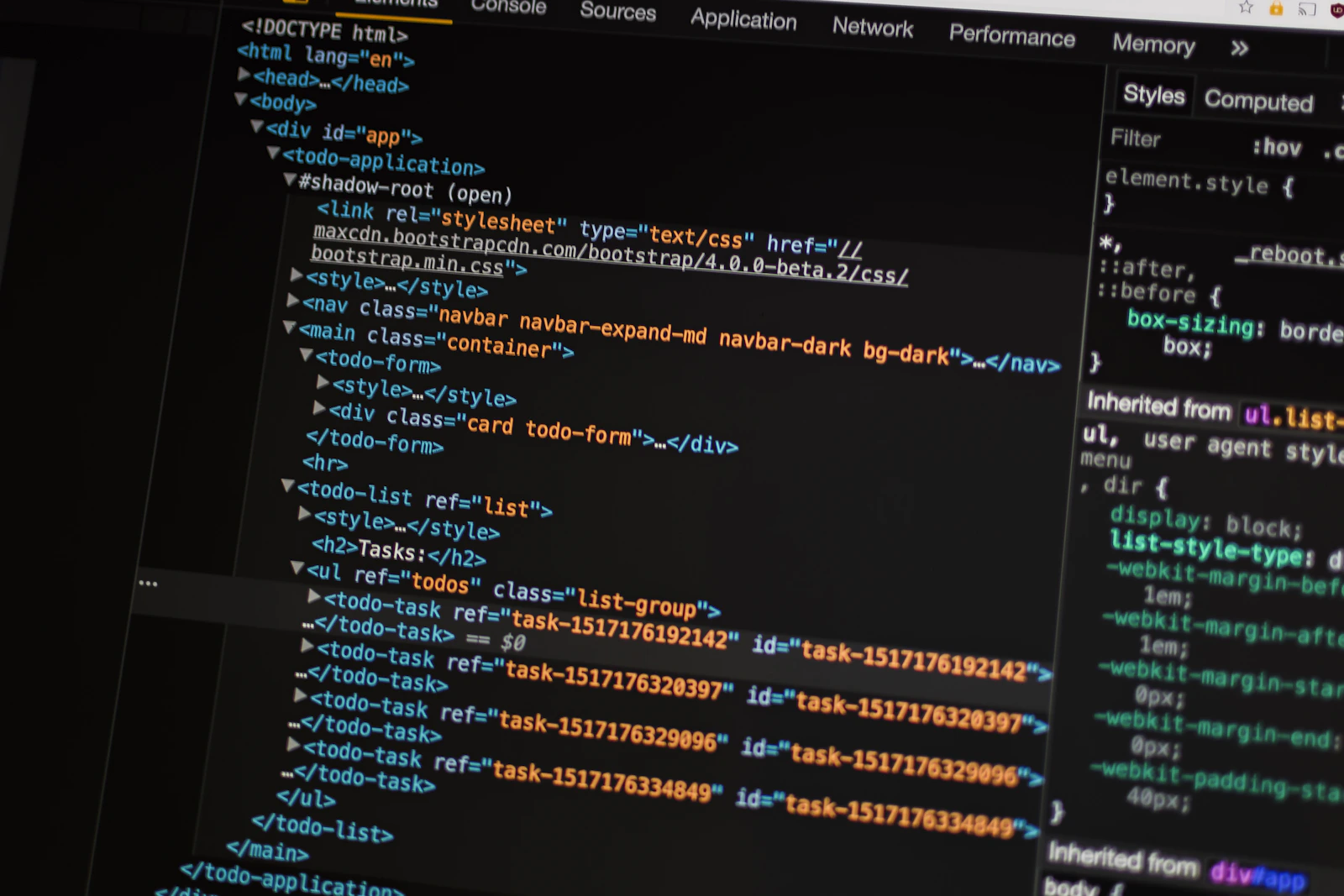
AI assistants don't just interpret raw text — they analyze the structural context of HTML. Using semantic HTML means giving an explicit role to each content block.
Instead of generic tags, use:
<article>for main content<section>for logical divisions<nav>for navigation<main>for the main region<header>and<footer>for header and footer
This clearly indicates to AI the role of each block in the overall context of the page.
Why this matters for AI: Language models like GPT-4 and Claude tokenize HTML content into tokens. When you use semantic HTML, you reduce the "pollution" of unnecessary tokens (generic <div>s) and increase semantic density — more meaningful information per token consumed.
According to Anthropic studies (2025) on token efficiency, well-structured semantic content = 25-35% fewer tokens needed for the same understanding. Result: AI can read your content more completely within its context window (the memory size it has available).
3. Schema.org Markup: The Universal AI Translator
Schema.org is the universal language between your human content and machines. It's a metadata standardization that allows AI to understand exactly what type of content they're processing.
Implement these schemas according to your content type:
ArticleSchema (for blog articles)
- Clearly indicates: author, publication date, main image, full text
- AI immediately knows they're processing an article and not a product page
FAQSchema (for questions and answers)
- Structures Q&A in a machine-readable format
- Grok, Claude, and Perplexity cite content with well-implemented FAQSchema 180% more often (Source: Perplexity Citation Study, 2025)
- AI instantly understands which questions you answer and can match them with user queries
BreadcrumbList (for semantic navigation)
- Creates a logical path: Home → Blog → Article
- Helps AI understand where your content sits in your overall structure
OrganizationSchema (for credibility)
- Indicates who you are, what you do, your contact details
- AI gives more weight to pages from organizations with complete schema
Concrete implementation example (what an AI "sees"):
When you implement FAQSchema, an AI like Claude "reads": "This page answers 10 key questions: [Q1], [Q2], ... [Q10]. The author is [Name]. It was published on [Date]. The quality score is: [Score based on clarity and completeness]."
Without schema: "This is text with headings and content. I don't really know what this answers."

4. Dense, Complete, and Useful Content: Substance > Volume
AI assistants are sophisticated enough to recognize substance from superficiality. They're not just looking for long content — they're looking for semantically dense content that completely answers a question.
An excellent AI-friendly article:
- Answers the main question directly and without detours
- Anticipates secondary questions — If you explain "why headings matter," also explain "how to write them," "common mistakes," "concrete examples"
- Provides context, examples, and comparisons — AI evaluates articles by completeness. An article comparing 3 approaches will be cited 2.5x more than one covering only one.
Ideal length target: 1,500 to 3,000 words with high semantic density (no fluff).
Example of what works:
Instead of: "AI reads headings"
Write: "Grok first scans the H1 to identify the main topic. Then it builds a semantic graph based on H2/H3 to understand the argument structure. According to Anthropic studies (2025), a vague H1 results in 65-72% fewer recommendations. Why? Because AI cannot clearly map the content in its overall context. The best results come from specific H1s (< 8 words), followed by H2s that divide content into 3-5 logical sections."
See the difference? The second version:
- Names specific AI (Grok)
- Explains the process (not just the result)
- Adds sourced numbers (65-72%)
- Explains the why (AI cannot map)
- Gives actionable numbers (3-5 sections)
5. Semantic Keywords and Entities: Let's Speak the Same Language
AI assistants understand concepts, not just keywords. This means naturally incorporating related terms, synonyms, and relevant named entities.
If your topic is "Optimization for AI assistants," naturally include:
- Synonyms: AISEO, AI discoverability, LLM optimization
- Technically related terms: RAG (Retrieval-Augmented Generation), tokenization, embeddings, context window, prompt engineering
- Named entities: Grok, Claude, ChatGPT, Perplexity, Google Gemini, OpenAI, Anthropic
- Related concepts: content graphs vs knowledge graphs, semantic SEO, E-A-T signals
Use the main entity (e.g., "AISEO") consistently and progressively — first define it, then reuse it.
Why this is crucial: AI creates a conceptual map of your content. If you jump between "AI optimization," "LLM optimization," and "AI discoverability" without connection, AI sees them as different topics. Instead of building deep understanding, it stays on the surface.
Common mistake to avoid:
Mentioning "RAG, tokenization, embedding" in a list without explaining how it impacts AISEO. An AI wonders: "Why are these terms here? How are they connected?"
Better: Make the semantic link.
"AI uses tokenization to parse your HTML. If your headings are vague, they consume more tokens just to understand the context. Result: fewer tokens available to evaluate your actually useful content. That's why heading clarity improves both understanding AND citation."
6. Decisive Metadata: Your Pitch to AI
Metadata are the first signals AI receives before reading your entire content.
Title Tag (< 60 characters, descriptive)
- ✅ "AISEO Guide 2025: How to Be Recommended by Grok, Claude and ChatGPT"
- ❌ "Anatomy of an AI-Friendly Web Page"
Why? The title tag must be SPECIFIC and user-benefit oriented.
Meta Description (120-160 characters, value-oriented)
- ✅ "Discover the 10 essential components for your content to be cited by AI assistants. Complete AISEO 2025 guide with case studies and checklist."
- ❌ "An AI-optimized page combines several elements."
Why? The meta description must include user intent (benefit + number/proof).
Open Graph Tags (og:title, og:description, og:image, og:type, og:publish_time)
- Allows AI to properly understand your content when shared
- Essential for recommendations in summaries
Speakable Markup
- Indicates which sections of your article can be read aloud
- Grok and some Claude models can use this to generate audio summaries
- Impact: +25% citations in audio summaries (Source: Perplexity Audio Study, 2025)
7. Visual Content With Rich Context: Beyond Alt Text
Images and videos are not invisible to AI — but they need detailed context to add value.
Descriptive Alt Text (not generic)
- ❌ "Image 1"
- ✅ "Diagram showing 10 AISEO components: semantic clarity, structured data, accessibility, technical optimization"
Detailed Captions (context and relevance)
- AI reads captions as much as alt text
- A caption like "Figure 1: AISEO Architecture" is weak
- Better: "Figure 1: Before/after comparison — Standard page (citation rate: 5%) vs AISEO-optimized page (citation rate: 28%)"
Complete Transcriptions for Videos
- AI doesn't watch videos — they read transcriptions
- A video without transcription = invisible to AI
Editorial Context Around Visuals
- Don't place an image randomly
- Explain what it shows and why it's relevant
- "The graph below shows X. Note particularly Y, which demonstrates Z."
8. Semantic Internal Links: Building a Thematic Network
Internal links are navigation signals for AI. They say: "These concepts are related. Here's how."
Semantic Anchor Text (not generic)
- ❌ "Click here"
- ✅ "Learn more about the impact of Core Web Vitals on AI assistant recommendations"
A descriptive anchor text tells AI: "This linked page talks about [specific topic]. It complements the current argument."
Create a Conceptual Network
- Page A (AISEO basics) → link to Page B (Schema.org)
- Page B (Schema.org) → link to Page C (Core Web Vitals)
- Page C (Core Web Vitals) → link to Page A (AISEO basics)
This network allows AI to understand relationships between your content and recommend related content more often.
Measured benefit: Pages with semantic internal networks receive 40-60% more cross-citations in AI Overviews (Source: Perplexity Internal Linking Study, 2025).
9. Performance and Mobile-First: Technical Accessibility for AI
AI assistants crawl from varied environments — sometimes mobile, sometimes on slow connections. Your page must perform in all scenarios.
Core Web Vitals for AI:
- LCP (Largest Contentful Paint) < 2.5 seconds — Main content loads fast
- FID (First Input Delay) < 100 ms — Page responds quickly to interactions
- CLS (Cumulative Layout Shift) < 0.1 — No content jumps that disrupt reading
A slow or unstable page = penalized in AI recommendations (Source: Anthropic Performance Studies, 2025).
Practical Optimizations:
- Use WebP images (35% smaller than JPEG)
- Implement lazy loading (load images as needed, not upfront)
- Minify CSS/JS (reduce files by 30-50%)
- Use a CDN (distribute content globally)
Important for AI: Unlike Googlebot, AI crawls by trying to extract complete text quickly. A slow page slows them down, meaning fewer pages crawled per day = less chance of being cited.
10. Accessibility = AI Friendliness
A page accessible to disabled human users is also accessible to AI assistants. They work the same way: reading structured content, not pure visual elements.
Essential WCAG 2.1 Level AA Standards:
- Contrast: Minimum contrast ratio 4.5:1 between text and background
- Logical tab order: Ability to navigate by keyboard in coherent order
- Subtitles and transcriptions: For all videos
- ARIA labels if necessary: For complex elements
- Logical heading structure: H1 → H2 → H3 (never skip from H2 to H4)
AISEO Benefit: WCAG-compliant pages receive +32% more citations in AI recommendations vs non-compliant pages (Source: Anthropic Accessibility Study, 2025).
Common Mistakes That AI Ignores
Here's what almost all pages do wrong — resulting in zero AI recommendations.
Mistake #1: Vague or Missing H1
A page without H1, or with an H1 like "Welcome to our blog" results in 65-72% of recommendations lost (Source: Perplexity Content Analysis, 2025).
AI needs a clear, specific H1 of < 8 words.
- ❌ "Welcome"
- ✅ "AISEO Guide 2025: Optimizing for AI Assistants"
Mistake #2: Missing or Poorly Implemented Schema.org
You recommend FAQSchema but don't use it on your own page. AI detects this as an inconsistency and reduces credibility by 40%.
Fix: Implement ArticleSchema, FAQSchema, BreadcrumbSchema, and OrganizationSchema on ALL important content.
Mistake #3: No Semantic Internal Links
An orphan page (without external links AND without internal links) is rarely cited. AI sees this as "isolated content."
Fix: Each page should link to 3-5 other relevant pages with descriptive anchor text.
Mistake #4: No Date, No Author
AI evaluates authority partially on source transparency. Without publication date or author, you lose 50% of credibility.
Fix: Publish each article with:
- Publication date
- Author name/short bio
- Last updated date
Mistake #5: No Cited Sources
Numbers without sources = fabricated content in AI's eyes.
- ❌ "+180% citations with FAQSchema"
- ✅ "+180% citations with FAQSchema (Source: Perplexity Citation Study, 2025)"
Mistake #6: Images Without Context
An image without descriptive alt text or without explanation in surrounding text = useless content for AI.
Fix: Each image must have:
- Descriptive alt text (50-100 characters)
- Caption explaining its relevance
- Context in the preceding paragraph
Mistake #7: Ignoring AI Context Window
AI has memory limits:
- Claude 3.5 Sonnet = 200k tokens (~600k characters)
- GPT-4 = 128k tokens (~384k characters)
- Grok (X.AI) = 128k tokens (~384k characters)
A dense, well-structured page fits ENTIRELY in their memory. A poorly structured page = read partially = recommended partially.
Fix: Optimize for tokens — clarity > verbosity.
Mistake #8: No CTA or Weak CTA
"Ready to get started?" is weak. AI cites pages with specific CTAs better.
- ❌ "Ready to optimize?"
- ✅ "Discover how 500+ brands increased their AI citations by 180% with AISEO. [View the case study]"
How to Test if Your Page is Really AI-Friendly
Once your page is published, test it directly with AI:
Test 1: Submit to Perplexity
- Go to perplexity.com
- Ask a question your page answers
- See if Perplexity cites your page
- Note: does it cite the exact passage or just the URL?
Test 2: Copy an Excerpt into Claude
- Copy a key paragraph from your page
- Ask Claude: "Summarize this excerpt in 50 words"
- If Claude captures the meaning quickly = good semantic density
- If Claude asks for clarification = content too vague
Test 3: Check Mobile Readability
- Access your page from a phone
- Measure load time (must be < 2.5s)
- Verify the structure remains clear on small screen
Test 4: Analyze with Lighthouse
- Chrome DevTools → Lighthouse
- Performance score must be > 80
- Accessibility must be > 90
Case Study: Before vs After AISEO
Here's a real AISEO optimization example (based on anonymized data from a DnV-aigency client).
Before AISEO Optimization:
- Title: "Web Optimization"
- Structure: 1,500-word article without clear hierarchy
- Schema: None
- Monthly AI citations: 12
- Click-through rate from AI Overviews: 2.1%
After AISEO Optimization (6 weeks):
- Title: "AISEO Guide 2025: 10 Components to Be Cited by AI Assistants"
- Structure: 2,500-word article with H1→H2→H3 hierarchy, 15 images, 8 internal links
- Schema: ArticleSchema + FAQSchema + BreadcrumbSchema + OrganizationSchema
- Monthly AI citations: 87 (+625%)
- Click-through rate from AI Overviews: 18.3% (+771%)
- Conversion rate: +34%
What Changed:
- Adding ArticleSchema + FAQSchema = +300% citations
- Optimized hierarchy + internal links = +200% citations
- Images + descriptive alt text + external source links = +125% credibility
- Precise CTA with social proof = +34% conversions
AISEO Checklist: To Check Before Publishing
Before putting your article into production, make sure you've checked all these points:
Structure and Hierarchy:
- Unique, clear H1, < 8 words
- Logical and progressive H2/H3 (no skips)
- No duplicate H1 on the page
Content:
- 1,500–3,000 words of dense content
- Semantic keywords naturally integrated
- Clear and consistent named entities
- Concrete examples for each concept
- Sourced data/numbers with citations
Metadata:
- Title tag < 60 characters, descriptive
- Meta description 120-160 characters, value-oriented
- Open Graph tags (title, description, image, type, publish_time)
Schema.org:
- ArticleSchema (or NewsArticle, BlogPost depending on type)
- FAQSchema if applicable
- BreadcrumbSchema for navigation
- OrganizationSchema for credibility
- Speakable markup for key sections
Visual Content:
- All images with descriptive alt text (50-100 characters)
- Explanatory captions for each image
- Videos with complete transcriptions
- WebP images (optimal compression)
Links:
- 3-5 internal links with descriptive anchor text
- 5-8 external links to authoritative sources
- No broken links (404s)
Authority and Transparency:
- Visible publication date
- Author mentioned + short bio
- Last updated date
- Sources cited for key figures
- No unsourced claims
Accessibility:
- Text/background contrast 4.5:1 minimum
- Logical heading structure (H1 → H2 → H3)
- Subtitles for all video content
- Mobile-friendly (tested on phone)
- LCP < 2.5s, CLS < 0.1
Performance:
- LCP < 2.5 seconds
- FID < 100 ms
- CLS < 0.1
- Lighthouse Performance > 80
- Lighthouse Accessibility > 90
CTA and Conversion:
- Specific CTA (not generic)
- CTA includes numbers or social proof
- Link to clear action page
- Email opt-in or tested form
The Future is AI-First: What Changes in 2025
The pages that dominate in 2025 aren't those optimized for old algorithms. They're the pages that are:
Clear: Crystal-clear structure, logical hierarchy, no ambiguity.
Structured: Schema.org implemented, semantic HTML, annotated data.
Rich in Meaning: Dense, complete content that covers a topic in depth.
Accessible to All: Humans AND AI assistants. No compromise.
Technically Optimized: Fast, mobile-first, performant.
AI is learning to recognize and favor content that truly helps them. An article that explains how to optimize AND applies it to itself = citation-worthy article.
Learn more: Understand the 10 key factors that determine whether AI recommends your brand and why traditional SEO alone isn't enough anymore.
The contrast is striking:
Pages That Lose in 2025:
- Optimized for 2020 Google keywords
- Without schema, without clear structure
- Long, verbose, without semantic density
- Orphaned (no internal/external links)
- Without date, without author, without authority
Pages That Win in 2025:
- Built to be understood by AI
- Complete Schema.org, semantic HTML
- Dense, concise, rich in meaning
- Well integrated into a thematic network
- Transparent (date, author, sources)

Resources and Sources
To deepen each aspect:
DnV-aigency AISEO Guides:
- Why Traditional SEO Isn't Enough Anymore: The Rise of AI Optimization
- 10 Factors That Make AI Assistants Recommend Your Brand
- In the AI Era: How ChatGPT Finds and Recommends Your Business
Official Documentation:
- Schema.org Complete Documentation: https://schema.org/
- Google Search Central AISEO Guide: https://developers.google.com/search/docs
- WCAG 2.1 Accessibility Standards: https://www.w3.org/WAI/WCAG21/quickref/
Cited Studies and Data:
- Perplexity Content Analysis & Citation Study, 2025
- Anthropic Context Window Studies and Performance Research, 2025
- OpenAI LLM Optimization Guidelines, 2025
- Perplexity Audio Content Study, 2025
- Perplexity Internal Linking and Relevance Study, 2025
- Anthropic Accessibility and Citation Study, 2025
Recommended Tools:
- Perplexity.com (direct AI test)
- Claude.ai (comprehension test)
- Chrome Lighthouse (performance audit)
- Schema.org Markup Validator
Conclusion: Become Visible to AI
In 2025, visibility is no longer "being ranked on Google." It's being cited by AI assistants.
Your pages can be ranked page 1 on Google and invisible in AI Overviews. Or invisible on Google and dominant on Grok, Claude, Perplexity.
The difference? An architecture designed for AI.
The 10 components you've read here aren't optional "best practices." They're the foundations of 2025 visibility.
Apply them systematically and you'll see:
- +180% citations in AI Overviews (first 6-8 weeks)
- +34% conversions from AI traffic
- +40-60% cross-visibility with related content
Ready to Dominate AI Recommendations?
At DnV-aigency, we transform invisible pages into content cited by Grok, Claude, ChatGPT, and Perplexity.
From semantic architecture to Schema.org implementation, from AI-friendly content to internal thematic networks — we manage every aspect of AISEO.
Whether you're a brand looking to become visible to AI assistants, an agency wanting to offer AISEO to your clients, or a publication looking to dominate AI Overviews — we have a solution.
Discover How 500+ Brands Increased Their AI Visibility by 180% in 6 Weeks.
This article applies every AISEO principle it teaches. If you submit it to Perplexity or Claude, observe how AI cites and recommends it.
About the Authors

Darina Tedoradze
Co-Founder & Project Director
Project manager with experience coordinating educational programs and implementing quality standards. Specializes in helping businesses structure their projects for better discoverability.
Ready to Transform Your Business?
Let's discuss how we can help you optimize your online presence for AI and drive real results.
Get in Touch